

Lab Scores Up, Real Users Still Slow?
Website speed optimization that fixes Core Web Vitals for real users begin with a page speed audit and a plan to improve website performance across devices.
30-Day
Stabilization Plan
US/CA
Coverage
100%
Transparent Pricing
Who this page is for
Marketing and SEO leaders who need faster pages, better Core Web Vitals, and clear reporting that executives understand. If Lighthouse looks “green” but customers still complain—or if you’re stuck in the yellow/red for LCP, CLS, or INP—this page shows how Casa Media House turns speed work into measurable revenue impact.
Read More
What you actually get with Casa
You’re not buying a generic checklist. You’re getting a performance program that blends diagnostics, engineering, and measurement—so improvements stick.
Field-first diagnostics. We separate lab data from real-user (field) data to find what customers actually feel.
Root-cause fixes. TTFB, render-blocking CSS/JS, image strategy, third-party/app bloat, and CDN caching—handled in the right order.
Governed rollouts. Feature flags, canary releases, and monitoring guardrails lower risk.
Proof, not vibes. Dashboards that connect changes to LCP/CLS/INP and to business KPIs like conversion and bounce rate.
Platform-aware execution. Shopify, WordPress, headless stacks, and custom SPAs—optimized without breaking your CMS or apps.
In short: a website speed optimization program that ships durable gains—not just a one-week score spike.
The core problem: lab vs. real users
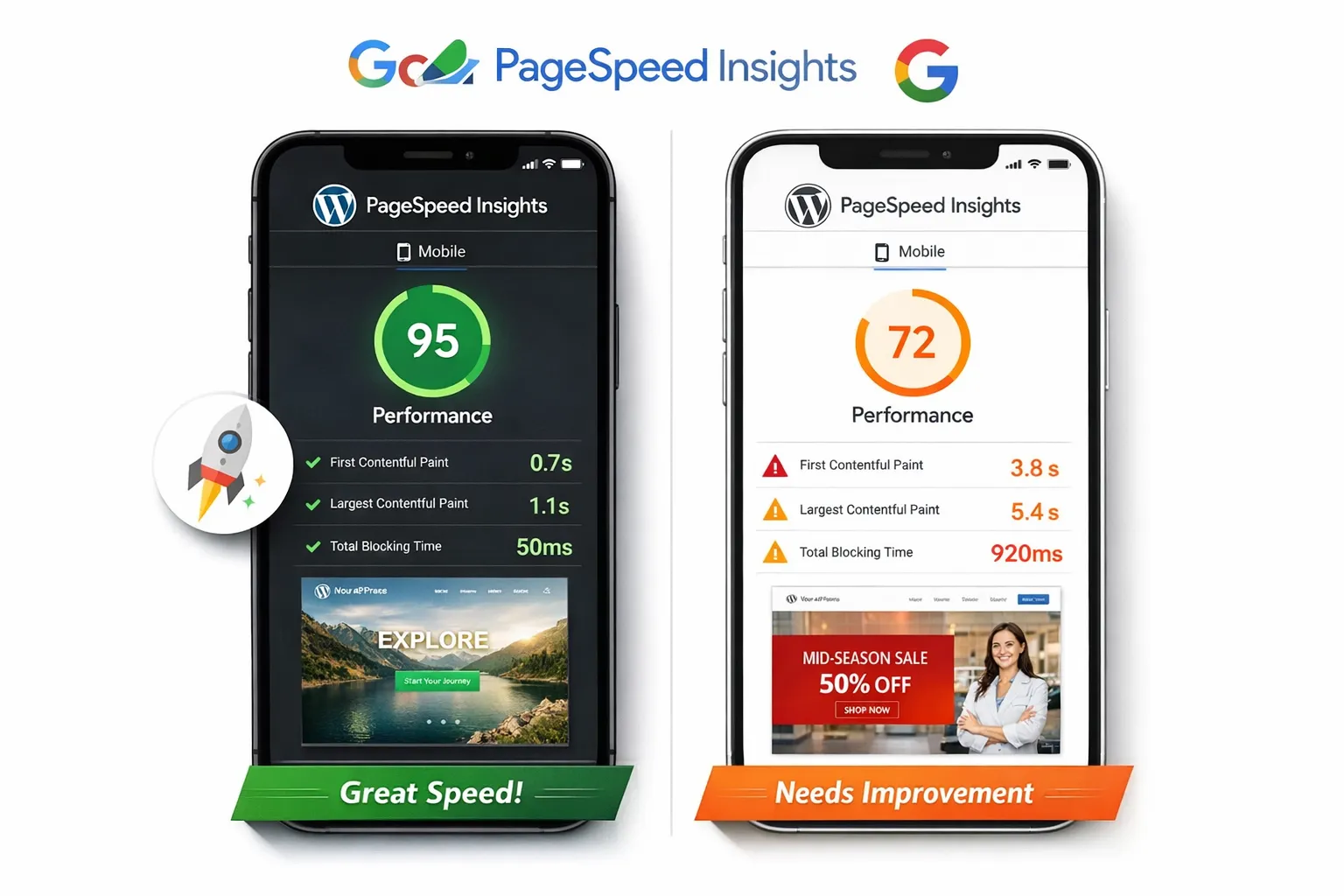
It’s common to see a 90+ Lighthouse score while CrUX/field data says customers are still waiting. Here’s why:
Lab tools run a short, simulated test on one device and one network.
Field data aggregates all users—slow phones, fast desktops, throttled mobile networks, cached visits, and everything in between.
Without field visibility, teams “optimize” for the lab and miss the real bottlenecks.
Our fix: start with a page speed audit that labels every issue as field or lab, set P75 targets for Core Web Vitals, and prioritize changes that move the needle for actual visitors.
Services mapped to outcomes
1) Page Speed Audit (the starting point)
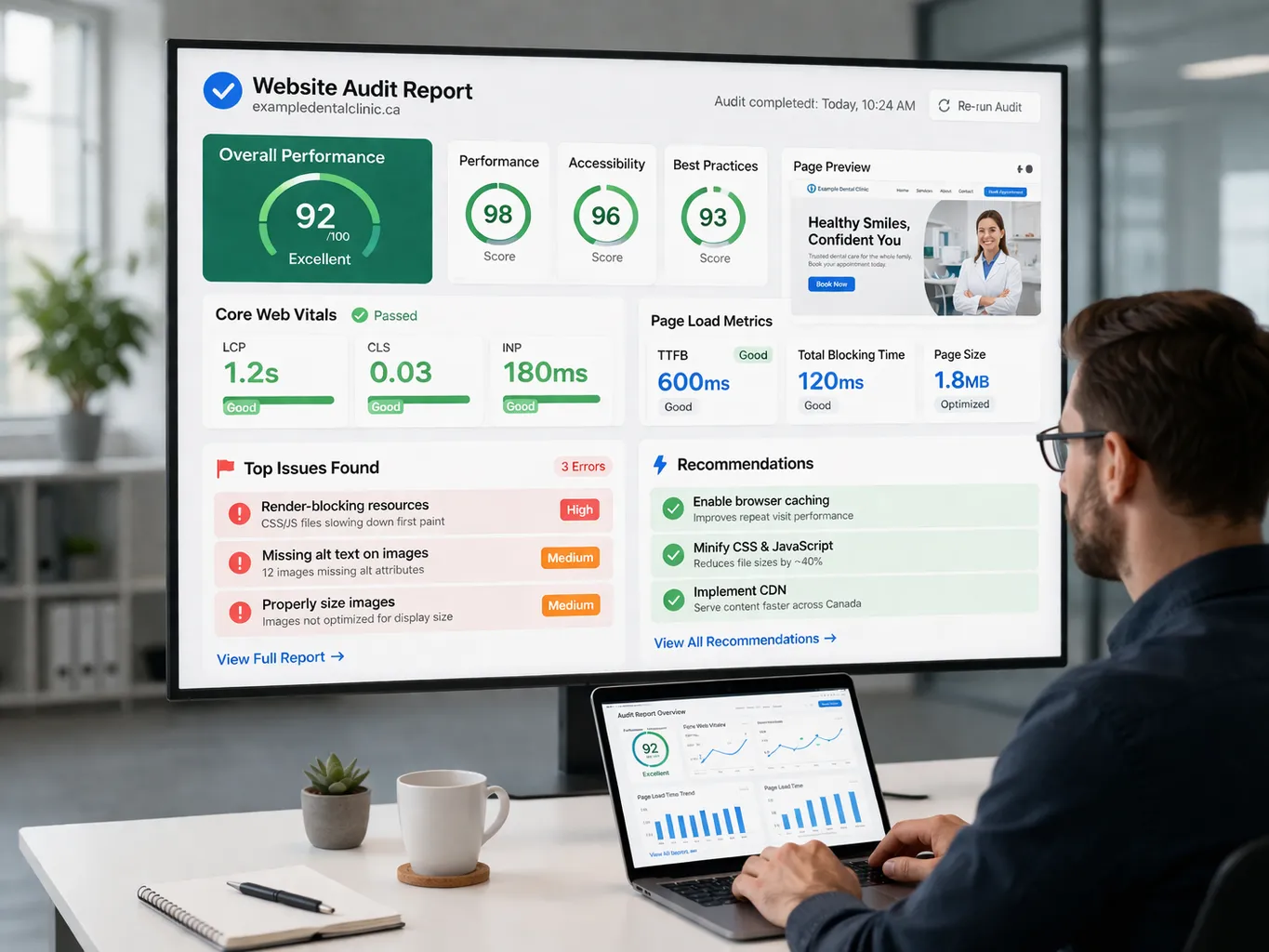
We baseline performance and produce a prioritized plan.
Data sources: PageSpeed Insights (field + lab), Lighthouse CI, RUM (if available), analytics, and server logs.
Findings: Where LCP suffers (TTFB, images, render-blockers), where CLS jumps (fonts, media, ad slots), and what hurts INP (main-thread work, long tasks).
Plan: A 30-60-90 day schedule that links each fix to the metric it improves and how we’ll measure lift.
Output: an executive-friendly brief and an engineering issue list (ready for Sprint 1).
2) Server & delivery layer (fix TTFB first)
Fast pages begin with fast responses.
Caching strategy: page, fragment, and API caching; cache keys that reflect personalization safely.
CDN configuration: image/CDN routing, smart TTLs, and edge rules for redirects and compression.
Protocol & compression: HTTP/2 or HTTP/3, Brotli, and early hints where supported.
Result: lower TTFB, a healthier LCP, and cheaper compute.
3) Render path engineering (stop blocking the view)
We ensure the browser can paint quickly.
Critical CSS extraction for above-the-fold content; non-critical CSS loaded async.
JS deferral/splitting: ship less JavaScript; defer non-critical bundles; break up long tasks.
Preload priorities: fonts, hero images, and key routes get the right priority hints.
Resource hints: preconnect, dns-prefetch, and prefetch to warm up connections.
Result: measurable LCP wins and fewer main-thread stalls that harm INP.
4) Image strategy (the biggest, easiest win)
Modern formats and sizing do heavy lifting.
Formats: AVIF/WebP with fallbacks.
Responsive sources: srcset/sizes and container-aware images to avoid overserving.
Lazy-loading policy: lazy by default, but eager for the hero.
Color/profile management to reduce bloat and preserve brand colors.
Result: smaller payloads, faster visual completeness, and happier design teams.
5) Stability by design (kill CLS)
Unexpected movement destroys trust and conversions.
Reserved space for media, embeds, and ads.
Font loading: font-display: swap or optional, with fallback stacks tested in UI.
Predictable components: consistent dimensions for headers, popups, and consent banners.
Result: CLS in the “good” range and a calmer experience.
6) Third-party & app rationalization (especially Shopify/Headless)
Every script must earn its keep.
Inventory & scorecard: what each script does, when it runs, and what it costs in main-thread time.
Control tactics: load on interaction, defer to idle, self-host static assets, or remove entirely.
Shopify hygiene: trim non-essential apps, switch to lighter alternatives, and move heavy logic off critical templates.
Result: less JavaScript, fewer long tasks, better INP, and more predictable releases.
7) Governance, testing, and reporting
Make performance improvements durable.
CI checks: Lighthouse CI budgets, size thresholds, and fail-the-build rules for regressions.
RUM and alerting: monitor LCP/CLS/INP for real users by page type and device; alert on drift.
Business KPIs: layer in conversion rate, bounce rate, and revenue so wins are visible beyond engineering.
Result: performance that stays fixed—and proof you can show to leadership.
What success looks like (and how we measure it)
Core Web Vitals: % of pageviews in “good” for LCP ≤ 2.5s, CLS ≤ 0.1, INP ≤ 200ms at P75.
Conversion lift: change in form submissions, add-to-carts, checkout completion, or lead quality.
Engagement: reduced bounce/exit on slow routes; improved time to first interaction.
Cost & stability: fewer incidents tied to scripts, smaller bundles, reduced bandwidth/CDN spend.
Score parity: alignment between lab metrics and field metrics after improvements.
Our delivery model (clear, low-risk, accountable)
Why teams choose Casa Media House
- Outcome-first. We tie every fix to Core Web Vitals and a business KPI.
- Calm expertise. Clear explanations, practical trade-offs, and safe rollouts.
- Platform-aware. We optimize Shopify, WordPress, headless/Next.js, and custom stacks without breaking marketing workflows.
- White-label friendly. Agencies can route audits and remediation through us—quietly.
- North American coverage. We support clients across Canada and the United States.
FAQs
A structured assessment that blends field data (CrUX/RUM) with lab diagnostics (Lighthouse/PSI) to prioritize fixes by impact and difficulty. It ends with a 90-day plan and issue list your devs can start on immediately.
Many sites see LCP and CLS gains in the first sprint once TTFB, images, and critical CSS are addressed. We report weekly on progress and tie it to conversions where applicable.
Only when it improves clarity or stability. Most wins come from delivery, render path, and image strategy—not from redesigning pages.
Yes. We can implement, pair with your team, or operate in a white-label capacity for your agency.
Yes United States, Canada, and Puerto Rico. We map geo targeting, ad scheduling, and localization where needed.
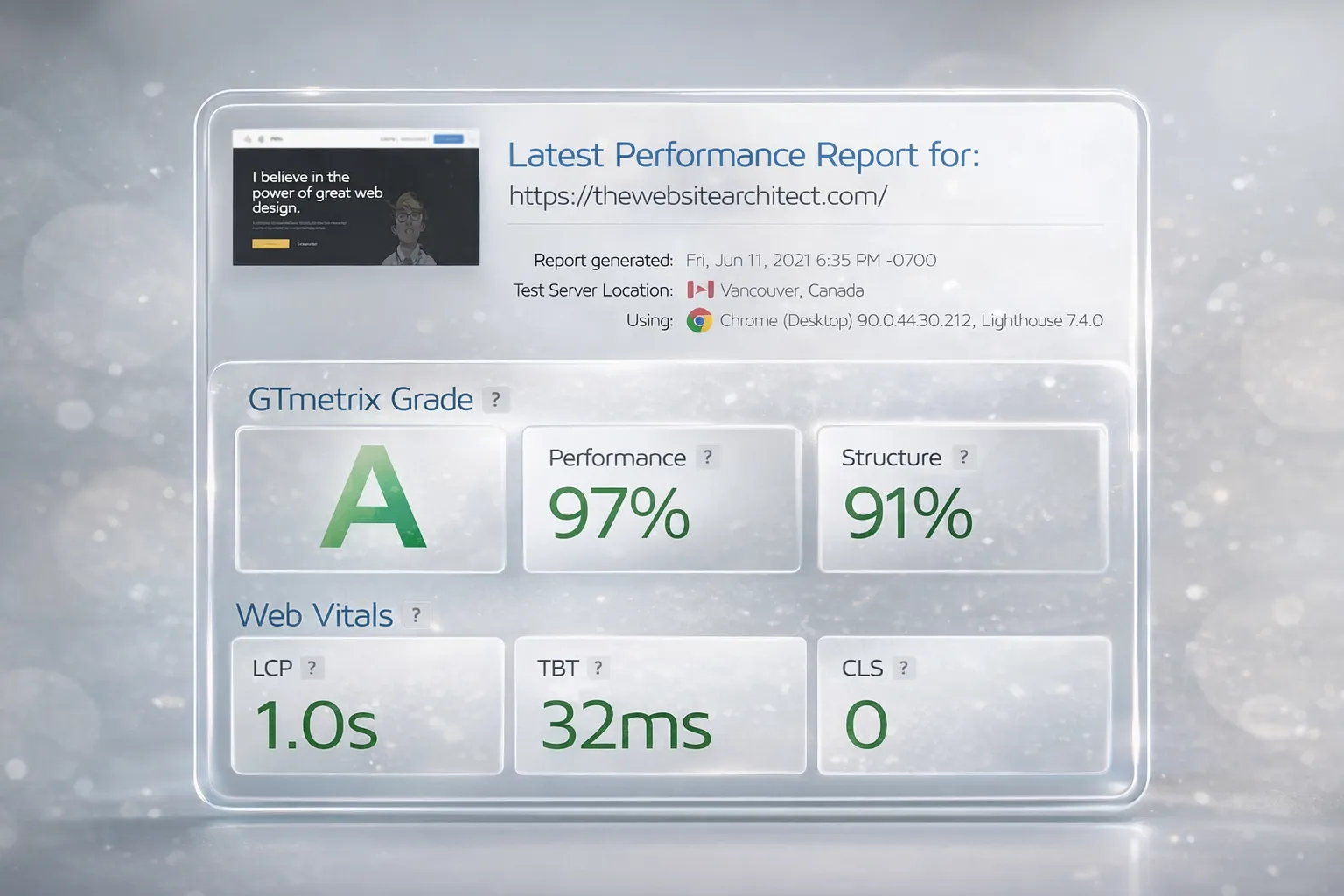
What you’ll walk away with
A prioritized website speed optimization roadmap and a clean issues list.
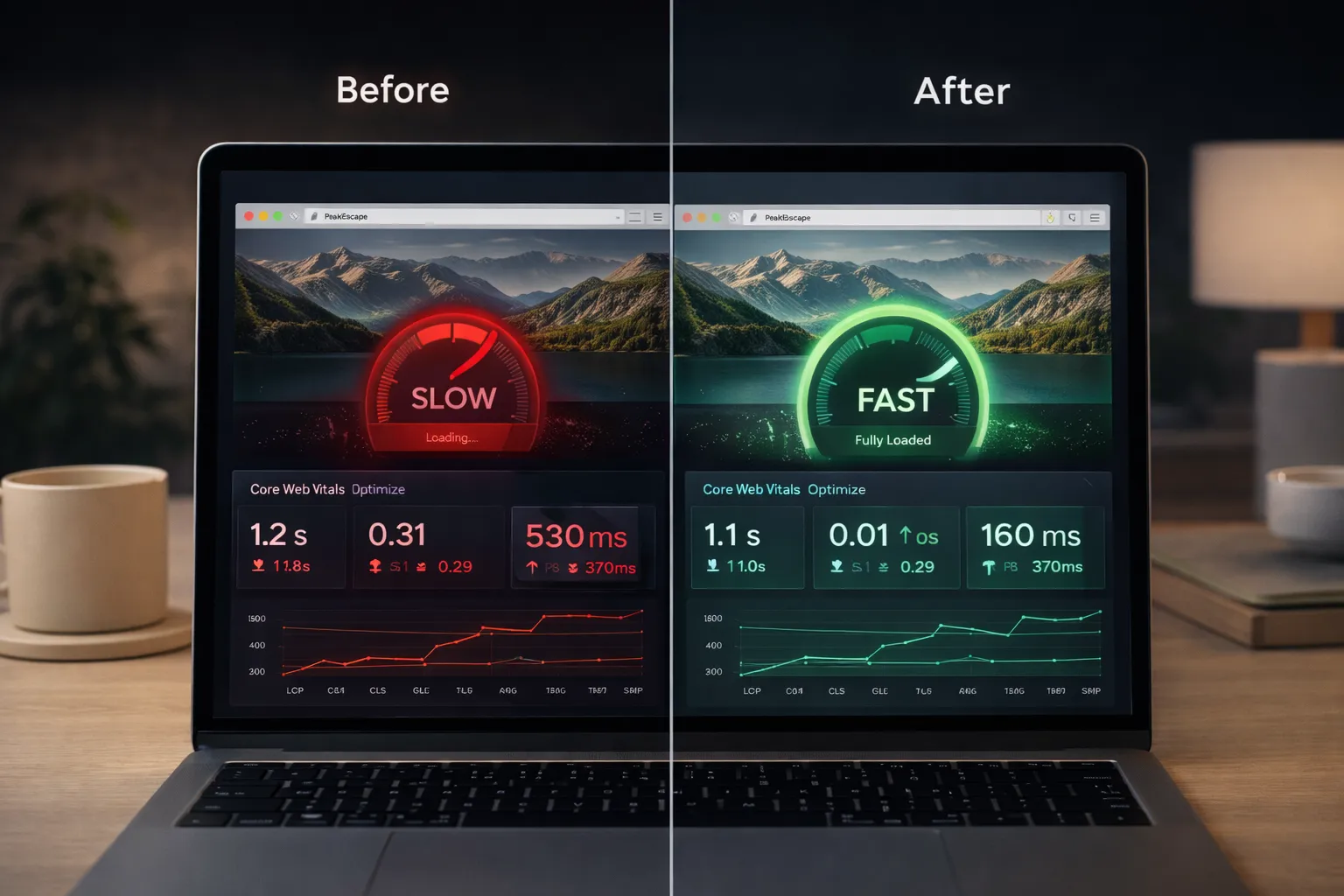
Fixes that move LCP/CLS/INP into “good” for real users.
Monitors and budgets that prevent regressions.
Executive-ready dashboards that prove you improve website performance and business outcomes.
Page Speed Audit FAQs: Core Web Vitals & Optimization Plan
Casa Media House supports organizations across Canada and the United States with remote collaboration and platform-specific playbooks.
Get your Page Speed Audit
Start with a focused page speed audit. We’ll baseline field + lab metrics, outline the top fixes, and ship the first set of improvements—then monitor how they lift both Core Web Vitals and conversions.